A boat's electrical system works in the worst possible conditions: salt, damp, vibration and big temperature swings. So older boats very often have an installation that works but is slowly getting worse. The problem is that a fault usually shows up at the worst moment, when you are at sea or in a bay with a flat battery.
Here are the signs that tell us an installation needs a look.
Greenish or white deposits on terminals
That is corrosion. On connections it raises resistance, so the joint heats up and the device does not get enough voltage. If you see this on a battery, a switch or terminals, it is not just cosmetic. It needs cleaning, and often the connection needs replacing.
Lights dim when the engine or thruster starts
A short voltage drop when starting is normal. If the lights flicker badly or the electronics reset, there is a cable that is too thin somewhere, a poor connection or an old battery.
The battery will not hold charge
If a battery runs down faster than before after a night at anchor, the cause can be the battery itself, but also current leaking somewhere. This kind of "quiet consumer" is often a forgotten pump, a faulty switch or a device that never goes to standby.
A smell of burning or warm cables
Do not put this off. A warm cable or joint means more current is flowing through it than it can handle, or that the connection is bad. It can end in a fire. Switch off the power and call a professional.
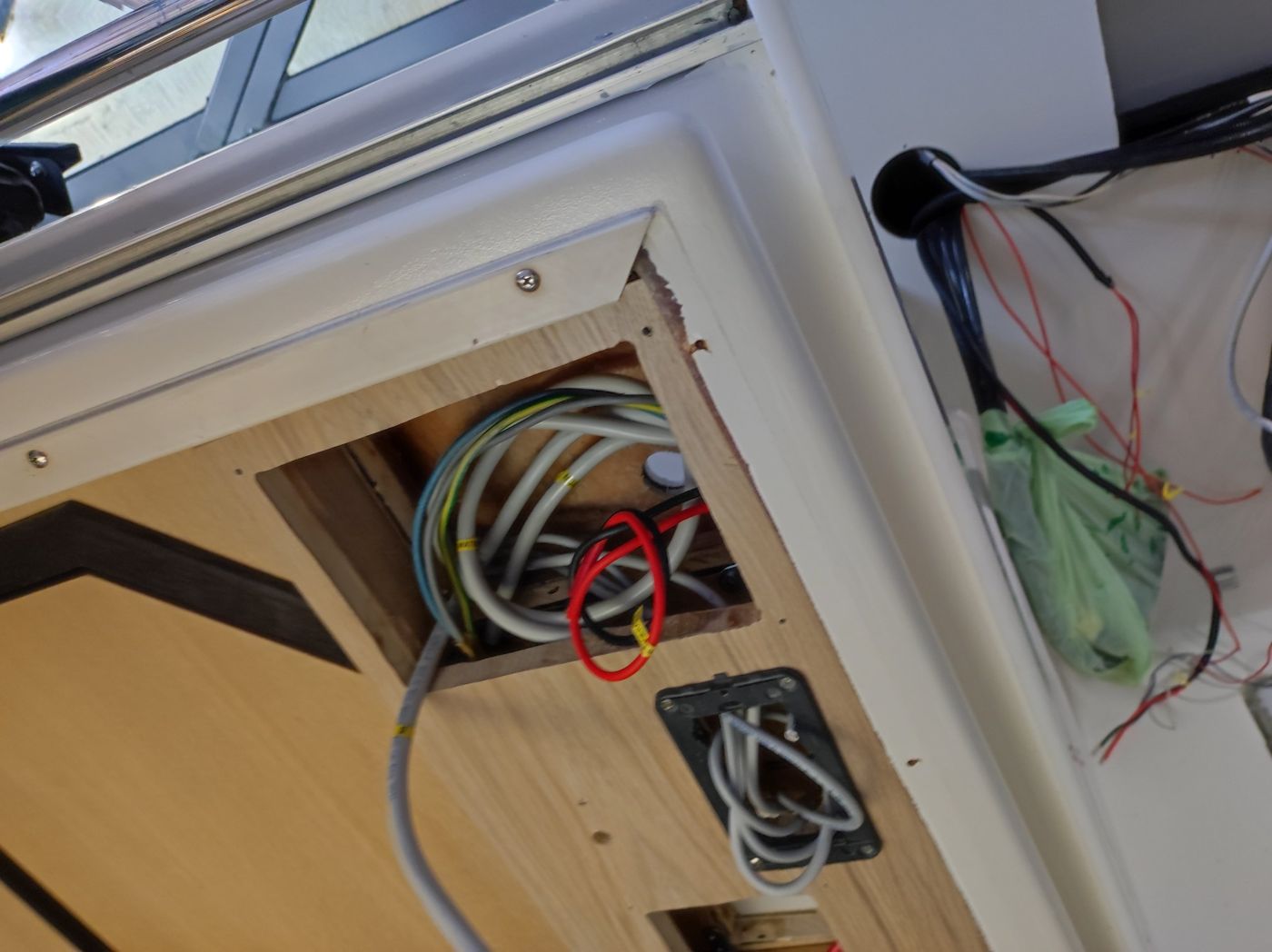
Do-it-yourself connections
Insulating tape on joints, cables twisted around each other, home-made extension strips. You often find this on a boat that has had several owners. Each one added a device and connected it "somehow".
A proper installation uses tinned copper wire, lugs crimped with the right tool, fuses close to the source, and cables labelled so you know what is what.
No fuses, or fuses that are too big
A fuse does not protect the device, it protects the cable. If it is too big, the cable heats up before the fuse blows. On some boats we find a cable connected straight to the battery with no fuse at all.
What to do
If you recognise any of this, it is a good idea to have someone look at the whole installation, not just the place where the fault is. For us that means testing the batteries, charging, distribution panels and the more important connections, and then telling you what is urgent, what can wait and what would be worth redoing.
Sometimes replacing a few connections is enough. Sometimes it makes sense to build a new distribution panel or do a full refit. You will only know after an inspection. You can read more on the boat service page.