The question "how many panels do I need" has one honest answer: it depends on what you use on board. So let's start with consumption, not with panels.
First, write down what you use
List the devices that run on the battery and how many hours a day they run. Fridge, lights, pumps, navigation, phone and laptop charging, maybe an autopilot or a TV. On paper this adds up to amp-hours or watt-hours per day.
The biggest consumer is almost always the fridge. For the CR42 model, according to factory data, total daily consumption is about 300 Wh, or about 25 Ah at 12 V. That figure applies at an inside temperature of +5 °C and an outside temperature of +25 °C. Bigger fridges use more, and consumption rises the more often the door is opened, so on a boat in hot weather it is usually higher than the factory figure. That is why people are often surprised how quickly the battery runs down after a week at anchor.
What one panel gives
On paper a 100 W panel gives 100 W. In real life it does not. The Adriatic has good sun in summer, but a panel spends most of the day below its rated power because of the angle of the sun, temperature and dirt. In Croatian conditions, on the coast and inland, a 100 W panel realistically produces 350 to 450 Wh a day in summer, which on a 12 V system is about 28 to 36 Ah. In winter that drops to 80 to 150 Wh a day, or about 6 to 12 Ah.
The fridge in the example above uses about 300 Wh a day, so in summer it needs roughly one 100 W panel to cover it. Once you add lights, navigation, pumps and device charging, a boat with basic consumption often needs a few hundred watts of panels, not one small panel that "tops it up a little". And in winter, when a panel gives only a quarter to a third of its summer output, you need three to four times as many.
Shade is a bigger enemy than clouds
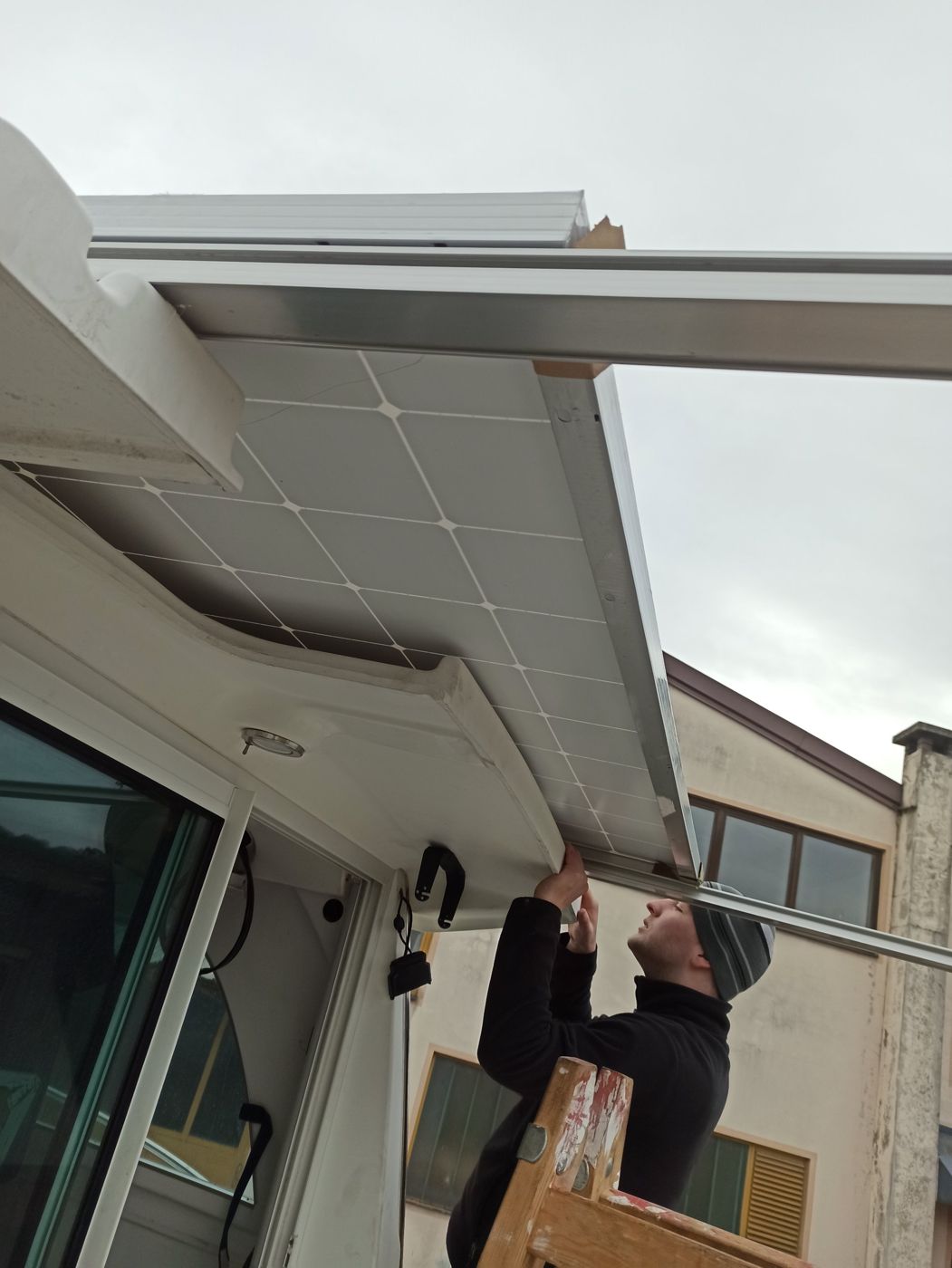
The shadow of a mast, a bimini or even a rope can cut production a lot. With some panel connections, one shaded cell drags down the whole string. So position matters more than it seems. A hardtop is usually a good place because it is flat and open, and on sailboats panels often go on the stern arch or the bimini.
The regulator matters
The charge controller makes sure the battery is not overcharged. MPPT controllers cost more than PWM ones, but they use the panels better, especially when they are partly shaded or when it is overcast. On most boats we work on, MPPT pays off.
Batteries and cables
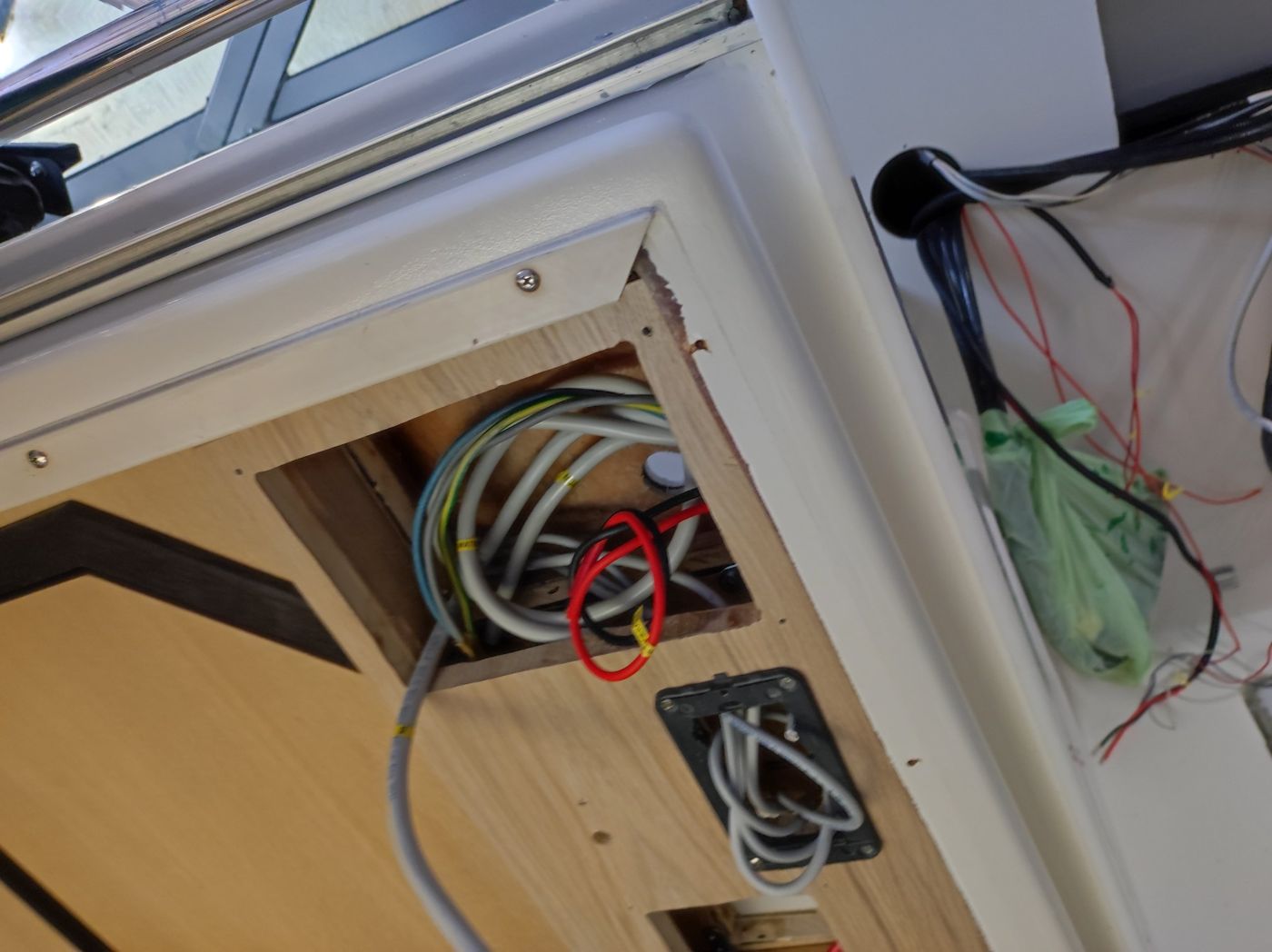
The panel is only half the story. If the battery is small or old, there is nowhere to store the power you produce. And thin cables or poor connections swallow part of what the panel makes. That is why, along with the panels, we look at the whole system: batteries, fuses, cable cross-section and the connection to the existing installation.
How to get to a number
The easiest way is to have the boat looked at on site. We look at what you use, how much space there is and what you already have in the installation, and then suggest a concrete system. We hold a certificate for solar panel installation, and we have been working on boats for around ten years.
If you are interested, tell us about your boat and what you use, and we will tell you what makes sense. You can read more on the solar panel installation on boats page.