Most people start wanting a bow thruster after one bad approach to a marina. The wind is blowing from the side, the berth is just wide enough for one boat, and everyone on the neighbouring boats is watching. That is what a bow thruster is for: a small propeller in a tunnel across the bow that pushes the bow left or right when the engine alone cannot.
The question we get asked most is how powerful it needs to be. The answer is not just the length of the boat.
Thrust and boat size
Bow thruster power is given as thrust, usually in kilograms-force (kgf) or kilonewtons. For a boat of around 10 metres you would normally choose between 55 and 80 kgf, depending on the weight of the boat and the area the wind can push on. A hardtop, a flybridge and a bimini all act like a sail, so a boat with high superstructure needs a stronger unit than a low runabout of the same length.
A bigger unit is not always better. A larger motor draws more current, needs thicker cables and bigger batteries, and on a small boat it can be too strong for fine manoeuvring.
The tunnel in the hull
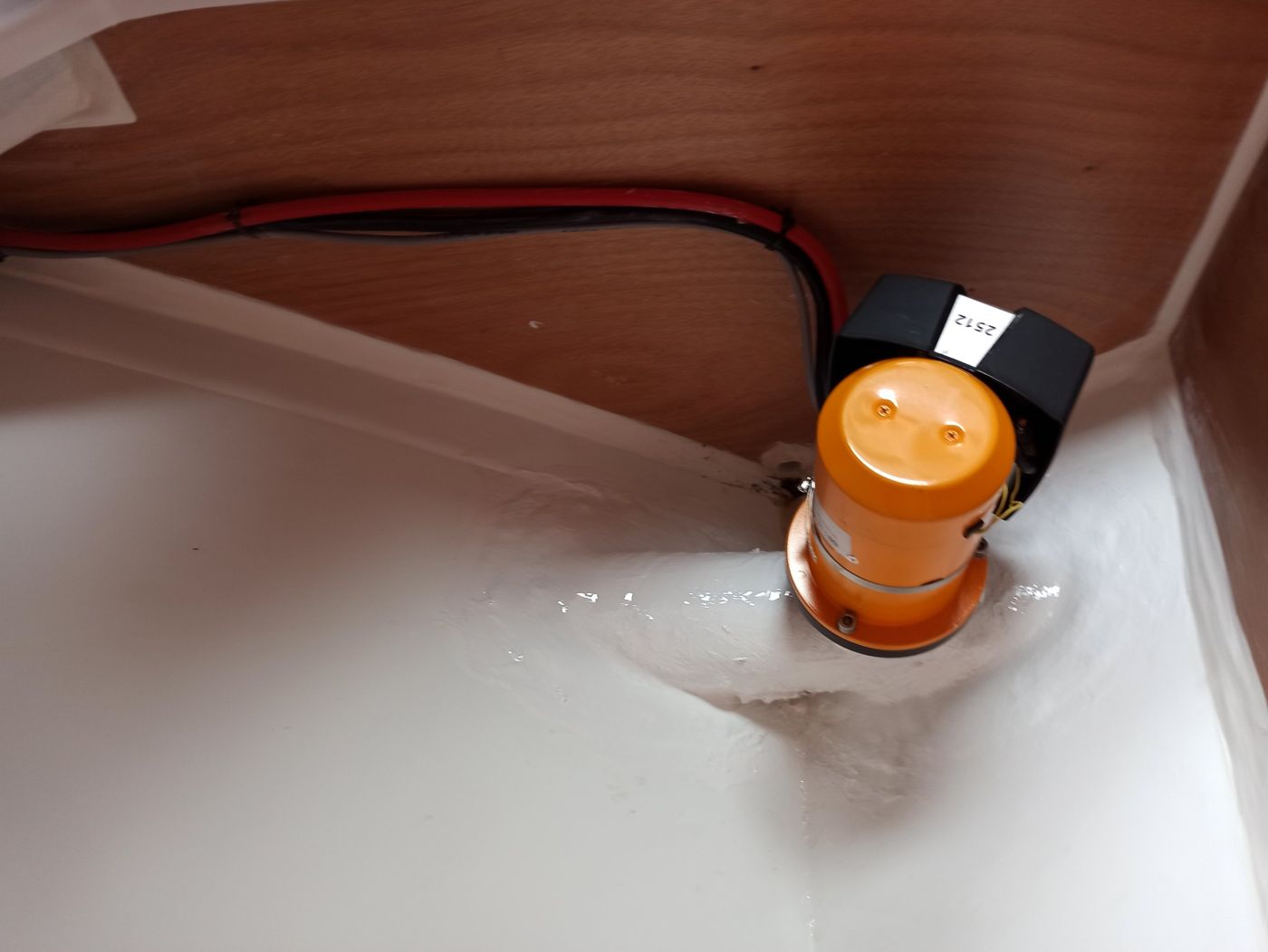
A bow thruster sits in a tube that runs through the hull from one side to the other. So installing one is not just a matter of plugging in a unit. The tunnel has to be built into the laminate, sealed properly, and set deep enough below the waterline. If it is too shallow, the propeller sucks in air and the thrust drops sharply. The exact depth depends on the manufacturer, so we always go by their instructions and not by feel.
We also have to check whether there is room in the bow at all. On some hulls the bow holds a tank, an anchor locker or frames that must not be touched.
Power is a bigger job than the unit
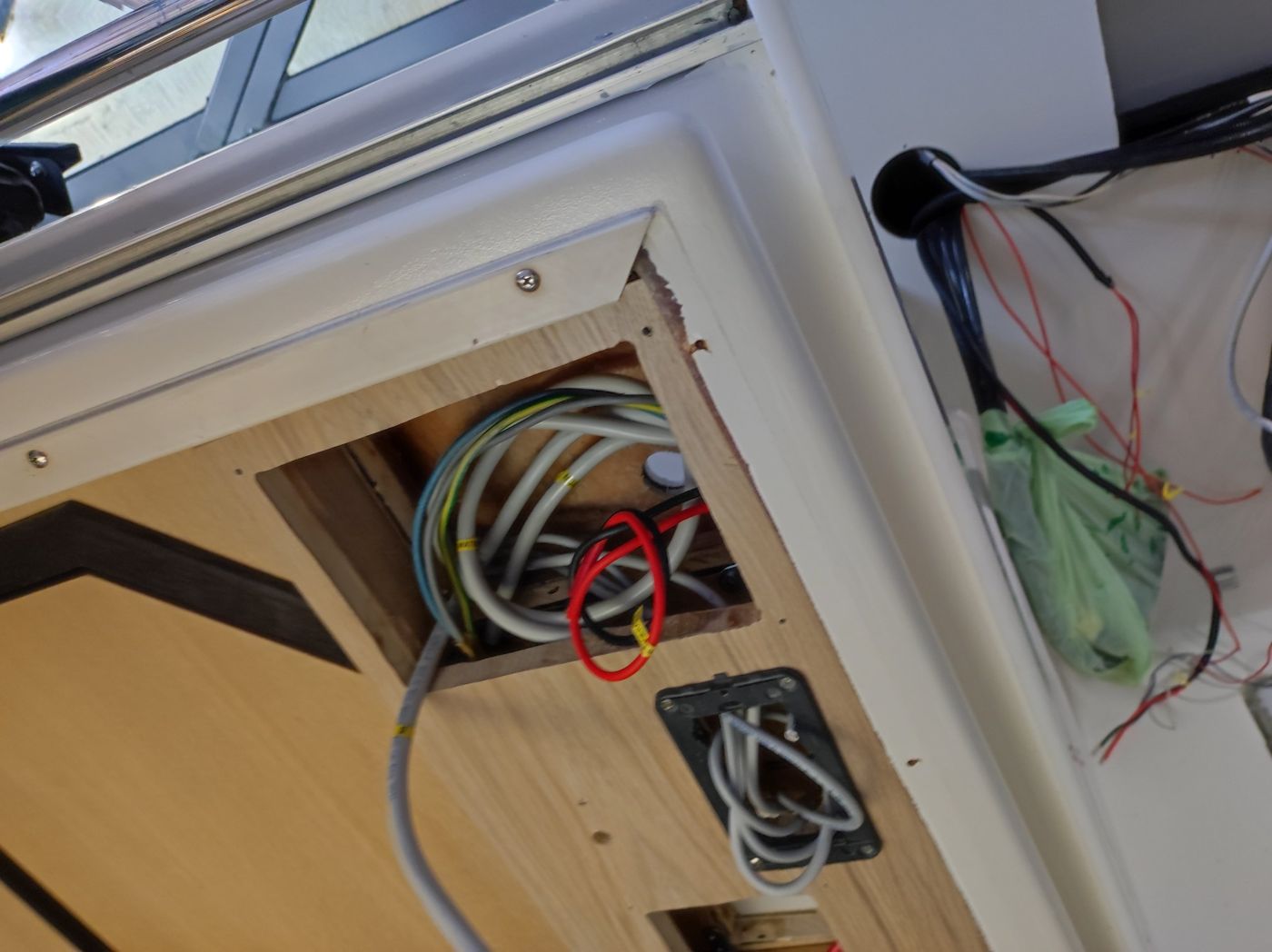
An electric bow thruster draws hundreds of amps while it runs. That is why it almost always gets its own battery close to the unit. The cables stay short and the voltage drop stays small. Long, thin cables are the most common reason a new thruster "has no power".
You also need a main switch, a fuse of the right size, and a panel or joystick at the helm. All of it has to be sized for the unit, not for whatever happens to be on the boat already.
It is not meant to run continuously
Most electric motors should not run for more than about a minute without a break, because they heat up. A bow thruster is for manoeuvring, not for holding the boat in the wind for half an hour. If you often anchor or tie up in difficult places, consider a hydraulic system. It copes better with longer running, although it is more expensive and more complicated.
What to do before you buy
The best thing is to have someone look at the boat before you buy the unit. Then you can see whether the tunnel can be built, where the battery and cables would go, and which size makes sense. That way you avoid buying a unit that simply cannot be installed neatly on your boat.
If you are thinking about a bow thruster, tell us the type and length of your boat and we will tell you what is possible. You can read more about the installation itself on the bow thruster installation page.